
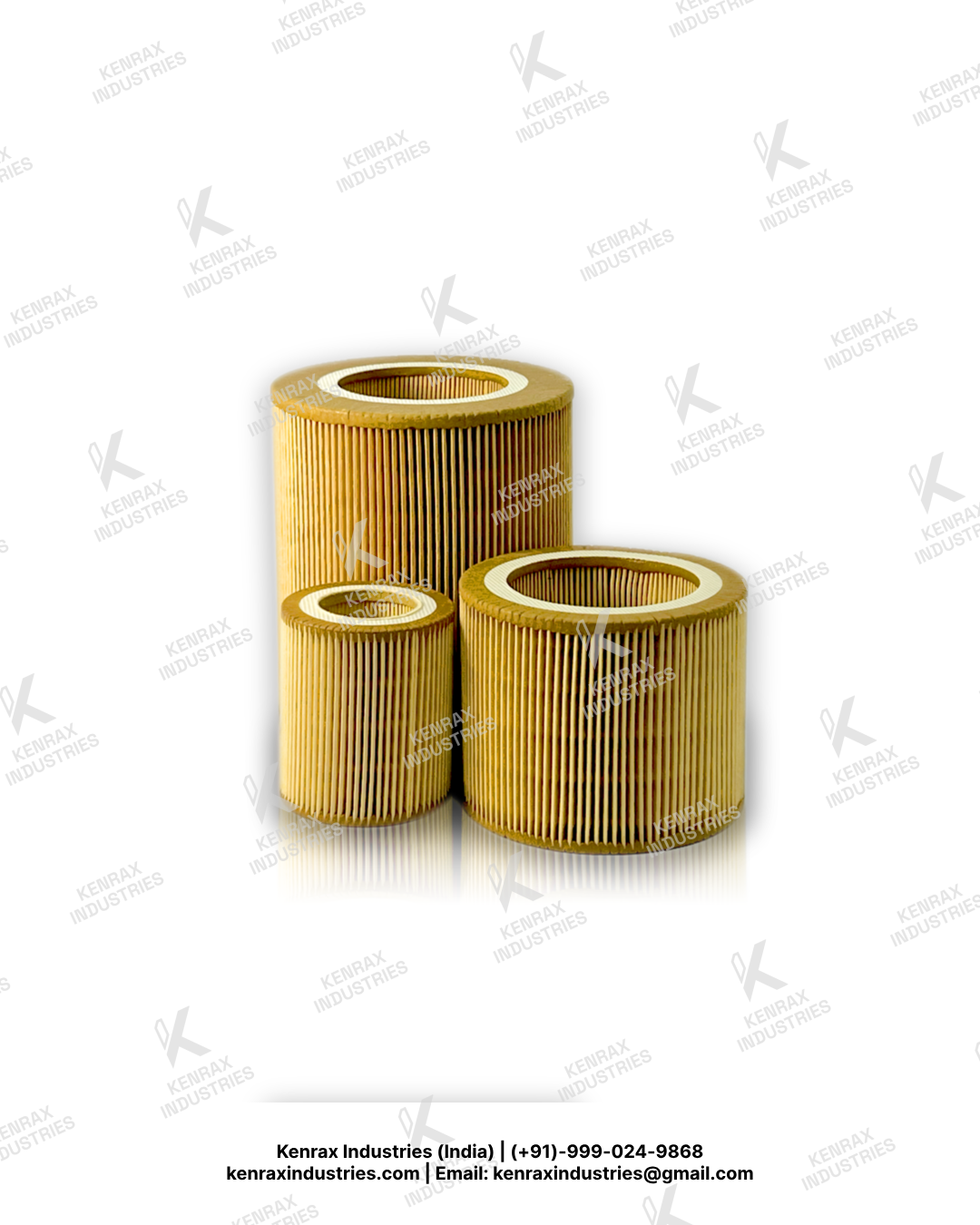
Every hydraulic system quietly produces contamination. The pump sheds wear particles, seals shed elastomer bits, and the fluid itself soaks up moisture and sludge over its life. In a closed-loop hydraulic circuit, there is exactly one place all of that debris flows back to the reservoir: the return line.
This guide explains what return line filters do, why they are easy to under-specify, how to size and monitor them, and when to change the element.
Where the return line filter sits and what it catches
In a typical circuit, the pump draws clean fluid from the reservoir, pushes it through the control valves and cylinders, and the spent fluid returns to the reservoir through the return line. The return line filter sits in that return path, catching whatever the components shed on the way back.
Because the return line carries full flow back to the reservoir, the filter runs at the full system return flow rate and, on the return stroke, at actuator velocity spikes. Sizing a return filter is therefore about flow and housing capacity as much as it is about filtration rating.
Why filtration rating (beta ratio) matters
Filters are rated by their beta ratio — a measure of how many particles of a given size the element removes. A Beta(x)=75 element removes 98.7% of particles of size x, and 75/76 of them are gauged. The 'micron' number on a can is shorthand for that size x.
Never down-spec the media to save money on a filter. The pump and valves are graded to expect a certain cleanliness class. Every step coarser than the specification shifts the wear load onto the very components you are trying to protect.
Sizing: flow, viscosity, and cold start
A well-chosen return line filter has plenty of dirt-holding capacity so that elements last a full service interval even in a dirty system. An undersized housing forces premature element changes and, worse, may push the filter's bypass open between changes.
The indicator: your early-warning system
Most return line filters carry a visual (and often electrical) clogging indicator that measures differential pressure across the element. That indicator is the single most useful maintenance signal in the hydraulic system:
Common failure patterns and their root causes
Return filter maintenance checklist
The one-line summary
The return line filter is the system's collection point for everything upstream sheds. Size it for full return flow, keep a fine enough media to protect the valves, trust the clogging indicator, and change on interval — it is the cheapest insurance your hydraulic circuit has. Kenrax manufactures return line filter elements and housings to OEM specification, matched to your part number. You can order these directly from Kenrax on WhatsApp (or check price on the product pages).