
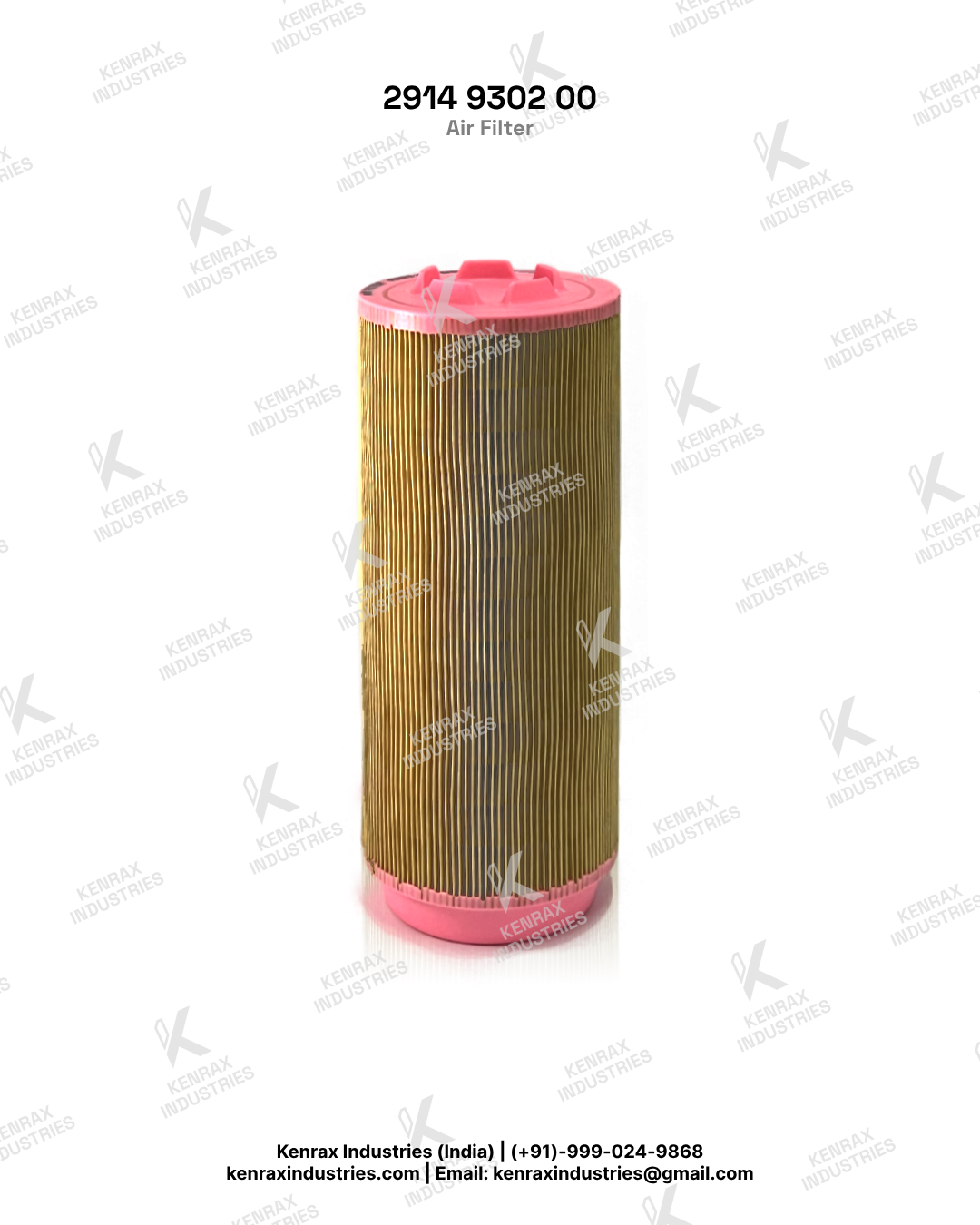
A screw compressor breathes a lot. A typical 75 kW unit draws around 15–20 cubic metres of air per minute — and every cubic metre of air in an industrial environment carries dust, dirt, moisture, and even oil vapour from other machinery. The air filter is the only thing standing between all of that contamination and your rotors, bearings, and oil system.
This is a practical, shop-floor checklist for maintaining compressor air filters. It is written from the perspective of a maintenance team that has 30 minutes on a scheduled shutdown and needs to know exactly what to check, when, and why.
Why the air filter matters
Inside a rotary screw compressor, the rotors rotate at high speed with clearances measured in thousandths of a millimetre. Abrasive dust that slips past a tired or damaged air filter gets pinched between the rotors and the housing, scoring the surfaces and contaminating the oil. The cost is never 'just a filter'.
In short, the air filter is the cheapest insurance policy on the machine. A discipline of checking it on a calendar rather than on failure will pay for itself many times over.
How often should you inspect the air filter?
The OEM interval for filter replacement typically falls in the 1000–4000 hour band depending on the compressor. But hours are a poor predictor when the environment changes. Two identical compressors, one in a clean climate-controlled hall and one beside a concrete batching plant, will need air filters at completely different frequencies.
The pre-shutdown inspection
Do the full external inspection during a planned shutdown, not while the compressor is running. Give yourself five minutes per machine and use a torch.
When to change — the definitive signs
Hours are a guideline; condition decides. Change the element when any of the following is true:
A useful trick: note the reading of the compressor's filter restriction indicator (or the differential pressure across the filter) at every service. A sudden, unexplained jump — say double the normal reading over a short period — is your earliest warning that something changed in the environment, such as construction nearby, and the filter is now loading rapidly.
What a clogged filter actually costs
It is tempting to "stretch" an air filter to the next quarter. Here is what actually happens when you run a compressor on a heavily loaded or clogged filter:
Rule of thumb used by many plants: for every bar of extra pressure drop at the intake caused by a restricted filter, you pay roughly 1% of the compressor's rated power. For a 75 kW machine running 6000 hours a year at ₹9 per kWh, that is about ₹4 lakh a year of wasted electricity for a single bar of restriction. The filter that would have cost a few thousand rupees suddenly looks very cheap.
Buying the right replacement
A filter is only as good as its media, its sealing, and its structural integrity. When you buy a replacement, check that it matches the OEM part on four things:
Kenrax manufactures direct-fit replacements to these exact specifications for all the major screw compressor brands, so the part drops straight in out of the box. You can order these directly from Kenrax on WhatsApp (or check price on the product pages).
The one-line summary
Inspect the air filter on a fixed cycle, change it on condition, never let it reach the bypass point, and buy elements that genuinely match the OEM spec. That single checklist line protects your air end, your energy bill, and your production schedule.