
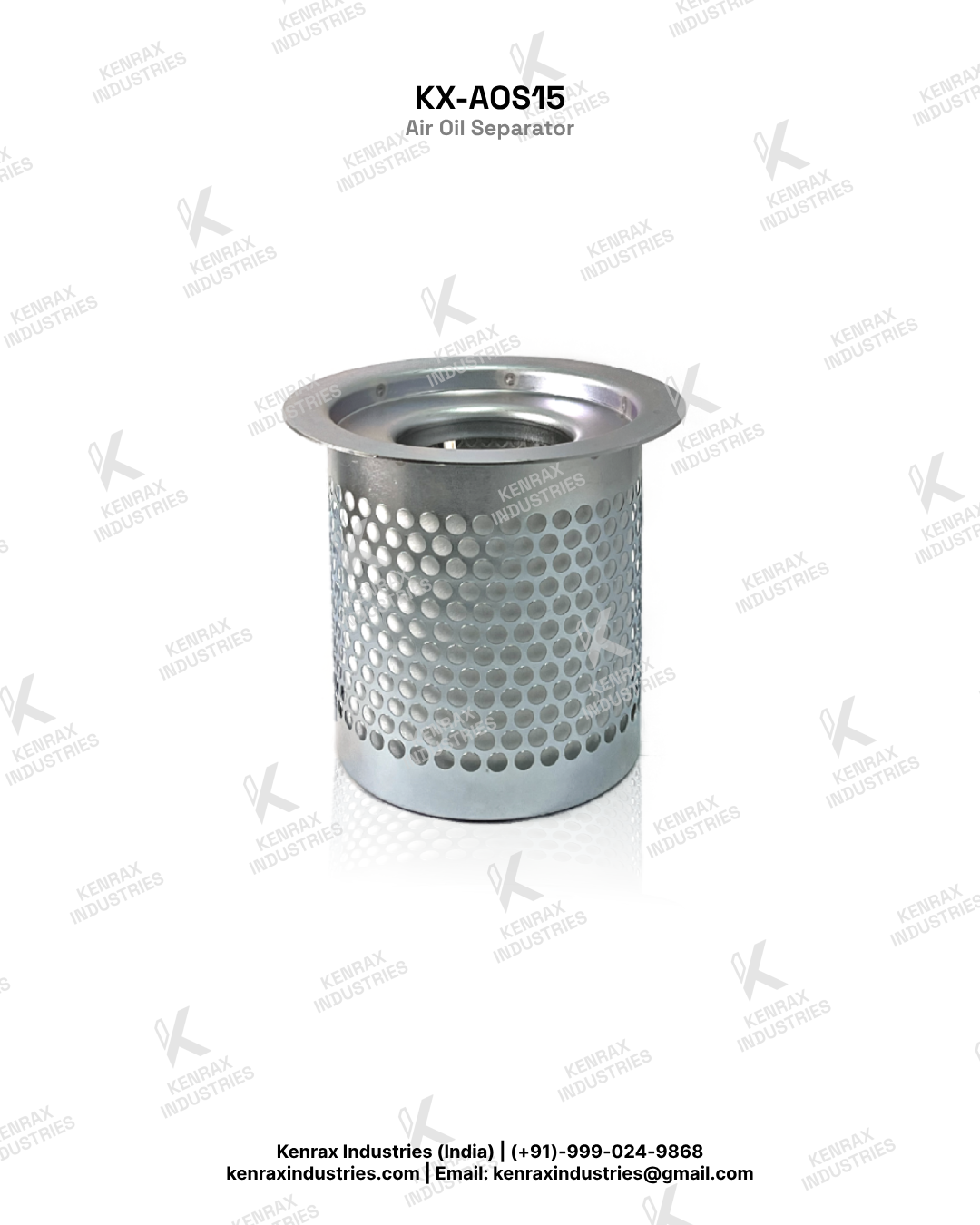
The air-oil separator is the component that removes the oil mist from the compressed air before it leaves the compressor. When it works, you never notice it. When it stops working, you notice it in three places at once: higher oil consumption, fouled downstream equipment, and pressure loss across the separator.
Here are the five signs that your separator element has reached the end of its life, what each one actually means, and what to do next.
1. Your oil consumption has crept up
A healthy separator returns nearly all the oil it captures back to the sump via the scavenge line. The tiny amount that escapes is expected and harmless. When the element starts to saturate — loaded with fines, varnish, or moisture — it can no longer coalesce the oil droplets efficiently, and oil starts leaving with the air.
The classic symptom is the top-up bottle coming out between services when it never used to, or the separator drain sight-glass filling faster than expected. A compressor that was fine on oil at change time but needs regular top-ups is a compressor with a separator problem until proven otherwise.
Why it matters beyond the oil bill: oil that leaves with the air is oil that is not in the sump, so the oil level drops, the compressor works hotter, and the machine enters a downward spiral of temperature and wear.
2. Oil is visible in or around downstream equipment
Look at the air receiver, the air dryer, the filters, or the compressed air line drops. If you see oily film, dark residue on the inside of piping, or oil in the condensate drain, the separator is letting oil past.
For food, pharma, electronics, and other quality-sensitive plants, oil in the air stream is not just a maintenance nuisance, it is an air-quality compliance failure. ISO 8573-1 class tolerance for residual oil is measured in parts per million — an aged separator can go from conforming to failing in a few hundred hours.
3. The pressure drop across the separator is rising
The separator sits between the air end and the point of use, so an ageing or loaded element adds resistance. Many compressors log the separator pressure drop, and a sudden rise is one of the most reliable early warnings there is.
The consequences of a rising pressure drop are proportional and mechanical: the compressor has to work harder to maintain outlet pressure, so it draws more power; the pressure ratio across the air end rises; and the additional pressure differential across the separator can increase oil carryover. You are paying for a restriction that is doing nothing useful.
4. You are replacing it well outside the OEM interval
Separator life is measured in service hours, and the OEM interval — commonly 2000 to 4000 hours depending on the machine and duty — exists for a reason. Like the oil filter, the separator degrades in ways you cannot see from outside. The media becomes saturated with sub-micron particles and the coalescing performance decays gradually, long before any alarm triggers.
A separator that has exceeded its interval is operating on borrowed time and borrowed performance. Replace it on interval, not on symptom. The plant that 'never really changed separators much' is usually the plant that quietly buys more oil and more downstream filters than its books show.
5. The compressor runs hotter or cycles more
A loaded separator raises the overall system pressure the air end must produce. Compressors respond to that by working harder, running hotter, and tripping into higher load cycles. If you track second-stage temperature or the pressure at the discharge, you will often see the drift days before the alarm.
The fix for all five signs is the same — replace the separator element with one that genuinely matches the OEM specification for media, dimensions, and sealing. It is a half-hour job on a scheduled shutdown and it restores oil consumption, pressure drop, and downstream air quality to normal.
How Kenrax separators fit into the fix
Kenrax manufactures air-oil separator elements to the OEM specification for each compressor model, so the replacement matches the exact coalescing media grade, the dimensional fit, and the sealing arrangement of the original part. You order by your OEM part number and the element drops straight in. You can order these directly from Kenrax on WhatsApp (or check price on the product pages).
The one-line summary
Watch oil consumption, downstream oil, separator pressure drop, interval over-run, and running temperature. Any one of the five is enough to schedule a replacement — all five mean it is already overdue.